
Where Can I Buy NAD+ 500mg?
Researchers looking for NAD+ 500mg for laboratory research can purchase it from Neuro Peptides. NAD+,
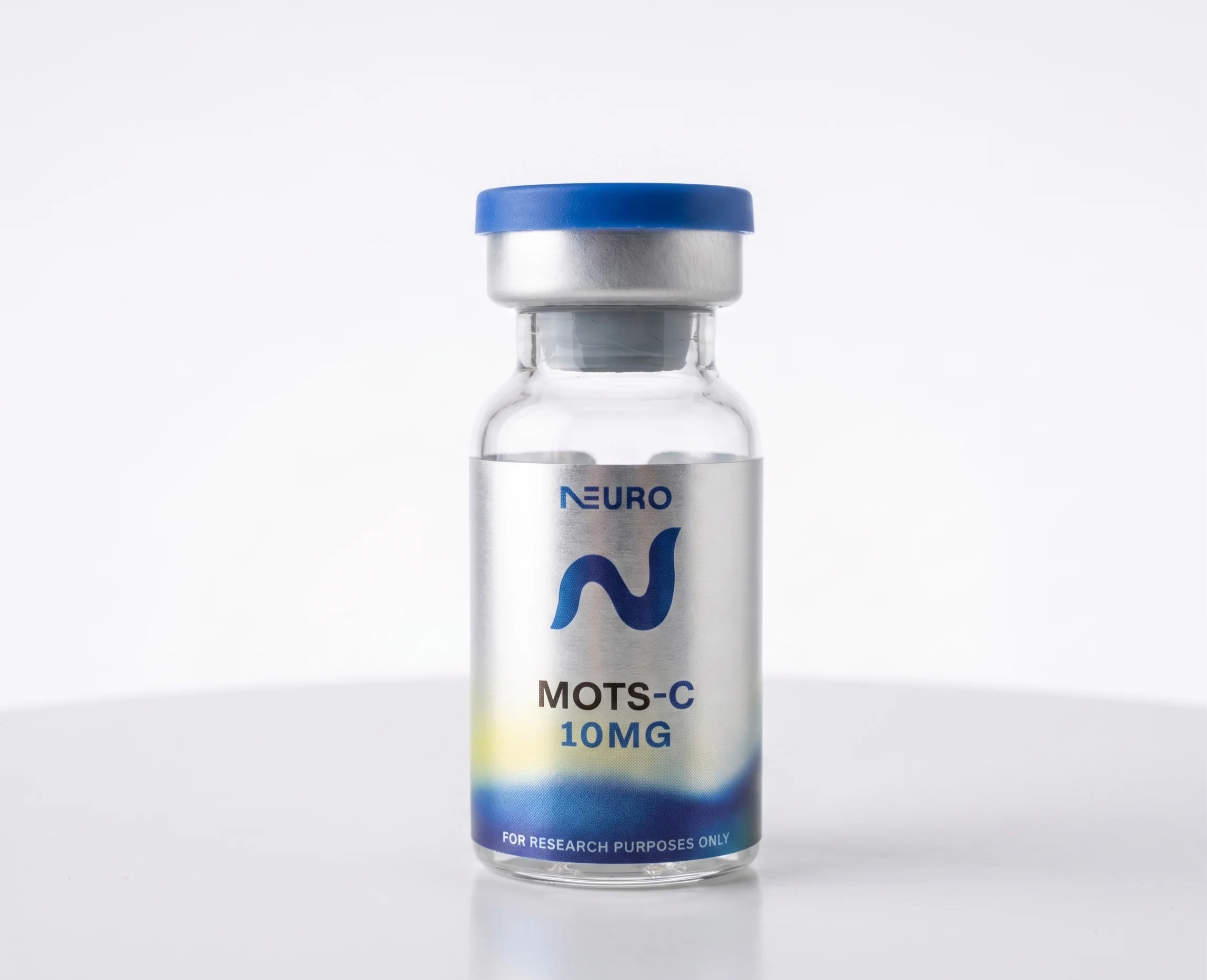
MOTS-C is a 16-amino-acid mitochondrial-derived peptide (MDP) that has attracted growing interest in research on cellular metabolism, glucose regulation, insulin sensitivity, and metabolic stress. However, unlike other peptides generated from nuclear genes, MOTS-C is encoded through a small ORF found within the mitochondrial MT-RNR1 gene associated with the 12S rRNA locus. Such a distinctive mode of encoding MOTS-C offers valuable insights into mitochondrial-nuclear communication studies.
Since its initial characterization, experimental research has investigated MOTS-C in relation to glucose and lipid metabolism, AMPK signaling, mitochondrial–nuclear communication, skeletal muscle metabolism, and metabolic adaptation. However, the strength of evidence varies by research model, and MOTS-C remains an investigational research peptide, rather than an established metabolic treatment.
Researchers can now buy MOTS-C at Neuro Peptides for their lab studies.
MOTS-C is a mitochondrial peptide coded from a short open reading frame located within the mitochondrial 12S rRNA domain. This peptide is part of a larger group known as mitochondrial-derived peptides (MDPs), comprising humanin and SHLPs.MDPs Identification: Broader Perspective on Mitochondrial DNA Functionality. The identification of MDPs broadens our understanding of the function of mitochondrial DNA, which is traditionally thought to encode parts of the respiratory system. Instead, mitochondrial-derived peptides may be involved in cell communication and metabolic regulation. In addition, it implies that peptides encoded by mitochondria may be involved in signal transduction pathways and metabolic control mechanisms.
The metabolic effects of MOTS-C were first characterized experimentally by Lee et al. (2015). This research involved experimental observations about the effect of MOTS-C on metabolic functions, including improved glucose tolerance, along with reduced diet-induced metabolic disorders among mouse subjects. Such results have provided the initial experimental basis for further MOTS-C metabolic studies.
Glucose homeostasis, lipid regulation, energy management, and metabolic stress sensing within cells are fundamental aspects of cellular metabolism requiring tight regulation. Based on current literature, it appears that MOTS-C impacts cellular metabolism via multiple metabolic pathways that may interact with each other.
One of the best-characterized mechanisms investigated for MOTS-C involves the folate-AICAR-AMPK pathway. Experimental evidence suggests that MOTS-C influences certain aspects of folate metabolism and purine biosynthesis pathways, enabling the accumulation of higher levels of AICAR, an AMP analog, which subsequently activates AMP-activated protein kinase (AMPK). As an essential cellular energy sensor, AMPK regulates many facets of metabolic physiology.
This pathway is significant because AMPK is a key regulator of glucose uptake, lipid metabolism, and cellular energetics. These findings have led investigators to examine MOTS-C as a potential mediator of cellular metabolic adaptation.
Wan et al. (2023) review defines the importance of the folate-AICAR-AMPK pathway in investigating MOTS-C physiology. In addition, Wan et al. note that MOTS-C interacts with various physiological pathways, including those associated with stress response, metabolism, inflammation, exercise physiology, and aging research.
Determining the impact of MOTS-C on glucose metabolism continues to be an integral part of MOTS-C-related studies. From its discovery in 2015, Preclinical research has shown that MOTS-C administration can improve glucose tolerance and protect against diet-induced insulin resistance in mice. These findings suggested that MOTS-C would have some sort of influence on systemic metabolic regulation systems.
Since then, further studies have concentrated on skeletal muscle tissue as a place where the effects of MOTS-C occur. Importantly, a review paper published in 2016 by Lee et al. emphasized the role of skeletal muscle tissue in the metabolic function under study for MOTS-C. Nevertheless, these discoveries do not prove that MOTS-C could become an effective method to counteract poor glucose metabolism.
Instead, these results can be seen as an experimental basis for exploring whether or not mitochondrial communication could serve as a tool in glucose metabolism.
Research into the interaction between MOTS-C and insulin sensitivity is another major topic area, especially concerning disorders of metabolism.
Current preclinical evidence suggests the possible role of MOTS-C in improving insulin sensitivity under metabolic dysfunction conditions. Specifically, proposed mechanisms behind the potential effects of MOTS-C involve AMPK signaling and alterations in metabolic pathways related to carbohydrates and cellular energy. In 2023, Kong et al.’s review of MOTS-C emphasized the molecule’s potential role in insulin function and metabolism and focused on the AMPK and mTORC1 pathways in the research context. It has yet to be determined whether the results of these animal trials can have any impact on humans, which requires further testing under controlled conditions involving humans.
Clinical studies performed among humans have assessed MOTS-C associations with metabolic biomarkers. Particularly, Du et al. (2018) identified decreased MOTS-C plasma levels among obese males relative to the control group. Among the obese male children and adolescents studied, circulating MOTS-C levels were inversely associated with BMI, fasting insulin, HOMA-IR, and HbA1c.
Though such data carry great importance for scientific purposes, appropriate conclusions must be drawn. Given the observational character of clinical findings, Because the study was observational, it cannot establish that changes in circulating MOTS-C cause insulin resistance.
AMPK is central to MOTS-C research because of its role as a key cellular energy sensor due to the relevance of this enzyme in cell energy regulation. In response to changes in cell energy, AMPK modulates many cellular processes like glucose uptake, fatty acid oxidation, mitochondrial activities, and energy conservation. Review papers have emphasized the significance of studying the folate-AICAR-AMPK pathway as part of MOTS-C research. Experimental analysis evaluating the effects of MOTS-C and exercise on metabolic adaptation via AMPK pathways involves mouse experimentation, generating results that show possible regulation of glucose metabolism and insulin sensitivity mediated by MOTS-C and exercise via AMPK pathways.
It should be noted that conclusions drawn from in vitro and animal experiments require considerable consideration before application to human subjects.
One of the most distinctive features of MOTS-C research is its proposed role in mitochondrial–nuclear communication.
According to the study conducted by Kim et al. (2018), MOTS-C translocation to the nuclear region may occur under metabolic stresses. The study found that MOTS-C translocates to the nucleus under metabolic stress, where it regulates nuclear gene expression in an AMPK-dependent manner. These findings reveal the regulatory function of this mitochondrion-encoded peptide on the nuclear genome.
These results indicate the regulatory effect of mitochondrial-encoded MOTS-C on genes located within the nucleus under metabolic stress conditions. Therefore, MOTS-C has applications in retrograde signaling mechanisms whereby mitochondrial activity affects cellular adaptation. From a metabolic perspective, it is significant for cellular metabolic research, considering that metabolism entails several components interacting within the system.
Skeletal muscle constitutes a highly relevant experimental system for studying MOTS-C.
Skeletal muscle MOTS-C investigations include studies into the relationship between MOTS-C and glucose metabolism, stress responses, exercise adaptations, and maintenance of homeostasis within the muscle tissue. According to Reynolds et al. (2021), MOTS-C regulates genes associated with metabolism and proteostasis regulation within skeletal muscles and mediates myoblast adaptation in response to metabolic stresses.
Additionally, the mentioned paper investigates the influence of exercise on the MOTS-C level both in skeletal muscles and blood. The discussed experiments enable analysis of MOTS-C involvement in muscle wasting. In experimental studies, MOTS-C therapy has been observed to have a protective effect on palmitate-induced muscle wasting through alterations in AKT, FOXO1, and myostatin pathways.
Empirical research literature generated from human studies provides limited data in comparison to preclinical studies.
Some empirical studies have investigated circulating endogenous levels of MOTS-C peptide and their associations with particular metabolic features. A 2024 systematic review and meta-analysis by Zhou et al. found differences in circulating MDP/MOTS-C levels across metabolic states, although substantial heterogeneity existed among studies. However, substantial discrepancies occurred when comparing obesity patient data to diabetes patient data. Heterogeneity was found in the results of empirical research studies conducted at present times.
Such a difference becomes crucial due to the fact that measurements of endogenous MOTS-C concentration in circulation cannot serve as indicators of exogenously applied MOTS-C actions. Most evidence concerning MOTS-C biological activity is derived from cellular culture and preclinical model studies.
Pharmacokinetic properties, biologic activity, dose-effect relationships, toxic effect potentials, and efficacy questions need additional controlled human studies.
Despite the extensive literature on MOTS-C, certain key limitations persist.
Mechanistically, most of what we know has come from cells and animal models. Additionally, observations from humans may reveal correlations, yet they cannot be taken to prove causation. Moreover, variations in population demographics, measurement techniques, metabolic status, and even preparations of MOTS-C complicate comparative analysis.
Another recent review paper on MDPs highlighted these peptides’ function as potential metabolic signaling mediators linking mitochondrial activity to cellular and physiological outcomes, although with caveats about the unclear clinical utility at present.
As a result, the correct classification of the compound under examination should be considered as an investigational research peptide rather than a clinically proven therapy for metabolic diseases.
Possible future directions for research include addressing multiple crucial aspects related to MOTS-C:
Answering these questions will help establish whether experimental results obtained from animal or cellular models apply to humans.
Preclinical and observational data suggest possible roles of MOTS-C in glucose and energy metabolism via folate metabolism, AICAR production, and AMPK signaling. Further research into these mechanisms is necessary to confirm them.
The role of MOTS-C in insulin sensitivity has been investigated using animal models. The evidence shows that the action of MOTS-C involves AMPK-mediated metabolic processes. In addition, observations in humans demonstrate correlations between serum MOTS-C concentrations and metabolic parameters; however, no causal relationships exist.
AMPK is a significant energy sensor in the cell, and the folate-AICAR-AMPK axis is among the pathways considered in studying the effects of MOTS-C. Laboratory experiments suggest that MOTS-C may be capable of modulating the metabolic processes of folate and the formation of AICAR, leading to AMPK stimulation.
In addition, preliminary data indicate the possibility of MOTS-C involvement in skeletal muscle metabolism and response to metabolic challenges. Moreover, exercise has been found to modulate the endogenous production of MOTS-C in skeletal muscle tissue and systemic circulation.
No. MOTS-C remains an investigational research peptide and is not an FDA-approved treatment. Research formulations should be designated Research Use Only (RUO) and are not intended for human consumption.
Since the identification of the MOTS-C molecule, studies have extended beyond the basic characterization of a mitochondrial-encoded peptide to encompass metabolic pathways including glucose metabolism, insulin sensitivity, AMPK activation, skeletal muscle physiology, and mitochondrial-nuclear interaction.
Lee et al.’s initial publication provided evidence showing that MOTS-C could impact metabolic homeostasis in experimental animals. Other works have further explored possible cellular mechanisms behind this process. Observational data involving humans have shown additional correlations with metabolic conditions; however, fundamental questions regarding causality, application, drug-like properties, and clinical significance still need clarification.
As such, the study of mitochondrial-derived peptides and cellular metabolism presents unique challenges to investigators interested in this topic. Interest in MOTS-C is increasing due to its involvement in mitochondrial signaling, metabolism, and nuclear transcriptional control. Despite the significance attributed to these processes, much about the biological significance of the connections is still unknown.
About the Author
Dr. Ethan Morgan
Neuroscience & Peptide Research Specialist · Medical Author at Neuro Peptides
Dr. Ethan Morgan is a Neuroscience & Peptide Research Specialist and medical author for Neuro Peptides. He has more than 10 years of experience in scientific research, medical education, and evidence-based content.
Areas of Focus
This article has been medically and factually reviewed by Dr. Ethan Morgan to ensure accuracy, clinical relevance, and alignment with current scientific literature.
Researchers looking for NAD+ 500mg for laboratory research can purchase it from Neuro Peptides. NAD+,
Mitochondria have long been understood as essential sites of cell energy production; however, accumulating evidence
Researchers looking for Retatrutide 10mg for laboratory research can find this research compound at NeuroPeptides.
MOTS-C is a 16-amino-acid mitochondrial-derived peptide (MDP) that has attracted growing interest in research on
MOTS-C is a mitochondrial-derived peptide (MDP) that has been extensively investigated in the context of
MOTS-C is one of the latest mitochondrial-derived research peptides being investigated with growing interest in