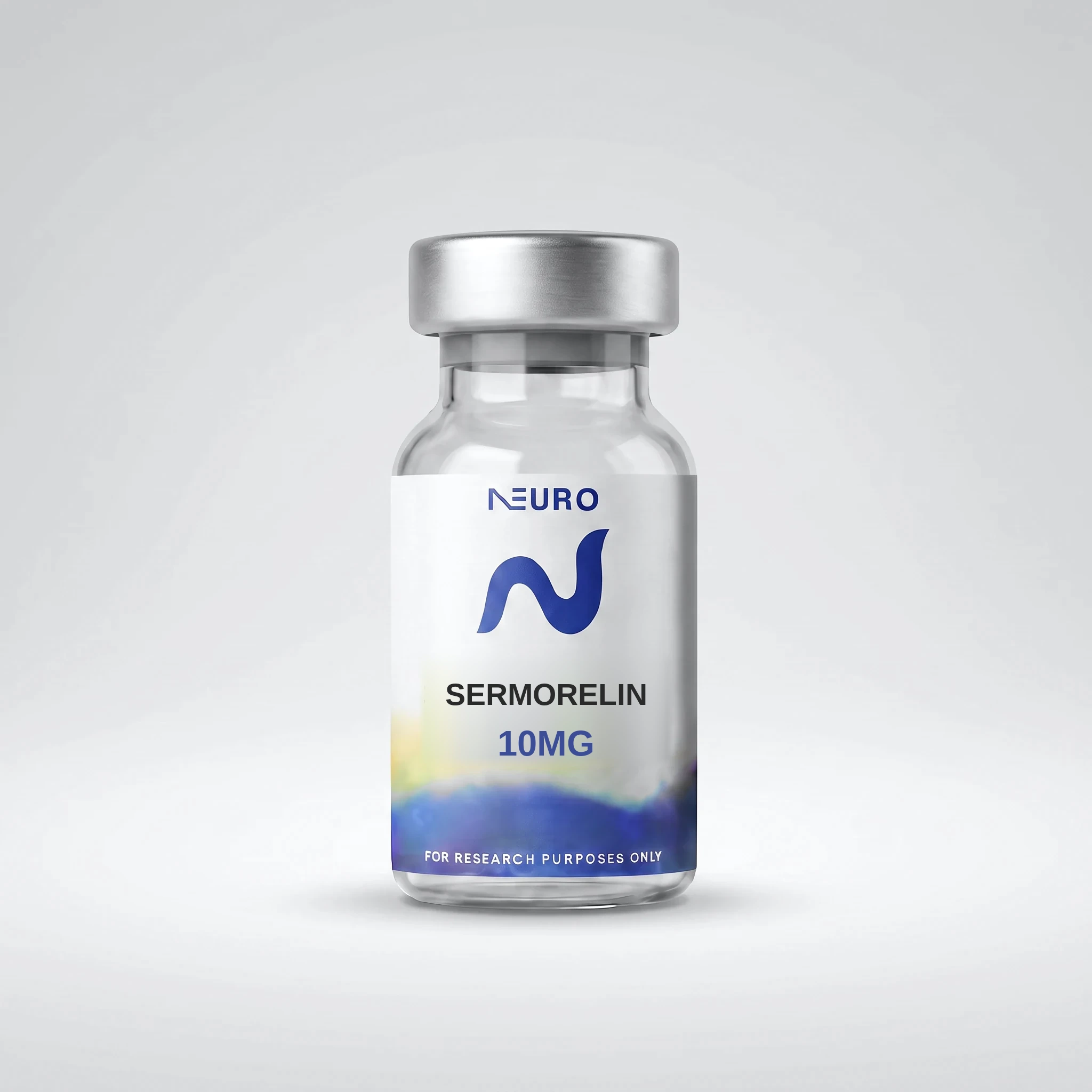
Sermorelin 10 mg
Sermorelin 10 mg is a highly purified peptide offered as a lyophilized powder for sophisticated studies of the growth hormone-releasing hormone (GHRH) axis, pituitary signaling, the physiology of the endocrine system, and peptide-receptor interactions. Due to the fact that Sermorelin is a synthetic analog of the bioactive N-terminal part of the native human GHRH, it is widely used in scientific research to investigate the mechanisms of control of growth hormone release, hypothalamic-pituitary signaling, and further hormonal processes. This product is manufactured according to strict quality requirements and is recommended for research purposes only and cannot be used for human or veterinary applications. (Harding et al., 2026; Frohman & Jansson, 1986)
What is Sermorelin?
Sermorelin is a 29-amino acid-long synthetic peptide that corresponds to the biologically active N-terminal fragment of human growth hormone-releasing hormone (GHRH 1-29).
Due to its capability of maintaining full biological activity upon interaction with the GHRH receptors, it has proven to be an indispensable resource in research on endocrinology and peptide science. As an analog of endogenous GHRH, sermorelin makes it possible to study the physiological processes responsible for growth hormone secretion within intact body feedback systems. (Prakash & Goa, 1999; Harding et al., 2026)
Mechanism of Action
As an agonist of the growth hormone-releasing hormone receptor (GHRHR) on anterior pituitary somatotroph cells, sermorelin activates intracellular cyclic adenosine monophosphate (cAMP) signaling cascades to promote the physiological secretion of endogenous growth hormone.
Given that sermorelin functions through stimulating the receptor of the naturally existing GHRH rather than administering the growth hormone externally, this makes it extremely important as a model system for scientific research that can enable researchers to study a range of physiological, endocrinological, pharmacological, and signal transduction processes. (Harding et al., 2026; Frohman & Jansson, 1986)
Research Applications
The Sermorelin 10 mg we provide is widely used for a variety of experiments associated with endocrinology, including research on hypothalamic-pituitary interaction, growth hormone release, insulin-like growth factor-1 (IGF-1), receptor pharmacology, metabolism regulation, and age-related endocrinological processes.
Moreover, this highly versatile drug is used to study peptide-receptor interactions, the negative feedback regulation in the GH axis, and the molecular basis of hormone-mediated cellular interaction. It should be noted that all these uses are purely scientific and investigational. (Frohman & Jansson, 1986; Harding et al., 2026)
Why Researchers Study Sermorelin 10 mg
The enduring popularity of sermorelin among scientists is, to some extent, due to the fact that it provides an ideal model system for the study of physiological mechanisms involved in the control of growth hormone (GH). Unlike the delivery of the GH from outside, the stimulation of the production of hormones through activation of GHRH receptors allows studying the complex interplay of hormonal signals.
In that it permits the investigation of basic endocrine principles like feedback mechanisms and hormone secretions in a pulsatile manner, this characteristic renders sermorelin a very valuable tool amongst research peptides in tackling issues about the reactivity of the pituitary gland, the signaling pattern of the receptors, physiological aspects of GH/IGF-1, and many more regarding the flexibility of the endocrine system under varied experimental settings. In any case, the molecular selectivity of this peptide continues to be very essential in endocrinological research and polypeptide treatment options. (Harding et al., 2026; Walker, 2006)
Product Specifications
Product: Name Sermorelin
Quantity: 10 mg
Synonym: GHRH (1–29), Sermorelin Acetate
Appearance: White to off-white lyophilized powder
Peptide Length: 29 amino acids
Purity: ≥98% (batch-specific analytical verification recommended)
Grade Research Grade
Formulation Lyophilized Peptide
Research Classification Growth Hormone-Releasing Hormone (GHRH) Receptor Agonist
Intended Use: Laboratory Research Only
Quality Standards
The availability of high-quality peptide materials is critical for producing reliable and reproducible scientific data.
Our Sermorelin 10 mg is produced through stringent quality control procedures that serve to assure our product’s identity, purity, and batch-to-batch consistency. Each production batch has been analytically verified for both its identity and purity to ensure reliable performance during laboratory research activities. We encourage researchers to read through all the available Certificates of Analysis (COAs) as well as other batch-specific analytical documents before employing them in their experiments.
Storage and Handling
Peptide Stability – To ensure that you keep your Sermorelin 10 mg stable, follow the instructions for storing provided by the manufacturer alongside those for handling at your lab.
Ensure that your samples are safe from excess heat, moisture, or direct light while following proper lab techniques.
Research Use Only Disclaimer
Sermorelin 10 mg is available for laboratory research only. Sermorelin 10 mg is specifically made for qualified scientists doing research in an appropriate laboratory setting. Sermorelin 10 mg is not meant for diagnostic, therapeutic, or preventive use in humans or animals. Sermorelin 10 mg is not meant to be used as a cure, treatment, or preventative measure for any illness or condition.
References
- Harding, S. D., Armstrong, J. F., Faccenda, E., Southan, C., Alexander, S. P., Davenport, A. P., … & Davies, J. A. (2026). The IUPHAR/BPS guide to PHARMACOLOGY in 2026. Nucleic Acids Research, 54(D1), D1446-D1456.
- Frohman, L. A., & Jansson, J. O. (1986). Growth hormone-releasing hormone. Endocrine Reviews, 7(3), 223-253.
- Prakash, A., & Goa, K. L. (1999). Sermorelin: a review of its use in the diagnosis and treatment of children with idiopathic growth hormone deficiency. BioDrugs, 12(2), 139-157.
- Walker, R. F. (2006). Sermorelin: A better approach to the management of adult-onset growth hormone insufficiency?. Clinical interventions in aging, 1(4), 307-308.